Best Telescopes for Viewing the Moon in October 2026
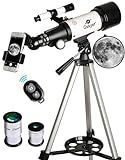
Gskyer Telescope, 70mm Aperture 400mm AZ Mount Astronomical Refracting Telescope for Kids Beginners - Travel Telescope with Carry Bag, Phone Adapter and Wireless Remote.
-
STUNNING CLARITY: ENJOY BREATHTAKING VIEWS WITH 400MM FOCAL LENGTH AND 70MM APERTURE.
-
VERSATILE VIEWING: INCLUDES 2 EYEPIECES, 3X BARLOW LENS, AND EASY FINDER SCOPE.
-
EASY TRAVEL: ADJUSTABLE TRIPOD AND CARRY BAG ENSURE PORTABLE EXPLORATION.


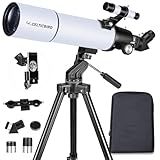
Celticbird Telescope for Adults High Powered, 80mm Aperture 600mm AZ Mount Refractor Telescope for Kids Beginners - Portable Telescopes for Adults Astronomy with Backpack, Phone Adapter, Moon Filter
-
CAPTURE CLEAR IMAGES: 80MM APERTURE AND MULTI-COATED OPTICS ENSURE BRIGHT VIEWS.
-
ULTIMATE PORTABILITY: COMES WITH A BACKPACK AND ADJUSTABLE TRIPOD FOR EASY TRAVEL.
-
USER-FRIENDLY SETUP: SIMPLE ASSEMBLY WITH NO TOOLS NEEDED, PERFECT FOR ALL AGES.
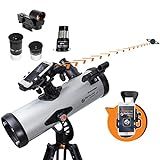
Celestron StarSense Explorer LT 114AZ Newtonian Smartphone Guided Telescope | Smartphone App Sky Navigation, Manual Reflector Telescope, Beginner Deep-Sky Telescope, Bright Celestial Views, Portable
-
DOCK YOUR PHONE & EXPLORE STARS WITH NO EXPERIENCE NEEDED!
-
PATENTED TECH TURNS YOUR PHONE INTO A CELESTIAL NAVIGATION SYSTEM.
-
INSTANTLY FIND TOP SKY OBJECTS BASED ON YOUR LOCATION AND TIME.
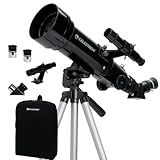
Celestron Travel Scope 70mm Beginner Portable Telescope with Backpack | 70mm Refractor Telescope Kit, Bright Lunar & Planetary Views, Day & Night Use, Backpack Included, Quick No-Tool Setup
- CRISP VIEWS ANYWHERE: 70MM APERTURE & COATED LENSES FOR SHARP CLARITY.
- BEGINNER FRIENDLY: QUICK SETUP FOR ALL AGES-NO EXPERIENCE NEEDED!
- INCLUDES ACCESSORIES: COMES WITH A BACKPACK, EYEPIECES, AND FREE SOFTWARE.
The Complete Moon Viewing Telescope Buyer's Guide in 2026 starts with one simple truth: the Moon is bright enough to impress through a modest telescope, but it’s also unforgiving. Cheap optics, shaky mounts, and exaggerated magnification claims that sound fine on a product page become obvious the moment you try to focus on the crater walls of Copernicus or the shadow line along the lunar terminator.
I’ve spent enough nights comparing compact refractors, tabletop reflectors, and entry-level Maksutov-style scopes to know this: for moon viewing, optical clarity and mount stability matter more than extreme magnification. A sharp 70mm to 90mm instrument on a steady mount will usually beat a bigger, wobbly telescope every single time.
If you’re trying to figure out the best telescope for viewing the moon, or you want one that also handles bright planets well, this guide will help you buy smarter. You’ll see what specs actually matter, which price tier gives the best value in 2026, and which red flags show up again and again in buyer reviews.
How we select products: Our team reviews telescope categories daily, analyzing customer ratings, pricing trends, build quality, mount design, return-pattern complaints, and real buyer feedback to identify options that deliver reliable value. For this guide, we prioritized models and telescope types that consistently meet a 4.0-star minimum, avoid inflated magnification marketing, and offer practical lunar performance for beginners and intermediate users.
Why does the Complete Moon Viewing Telescope Buyer's Guide in 2026 focus so heavily on the Moon first?
Because the Moon is the easiest serious observing target for beginners, and it reveals telescope quality fast. Even at 30x to 80x magnification, you can see maria, crater chains, bright ray systems, and the sharp contrast near the terminator if the optics and mount are decent.
That also makes it the ideal test case for buyers. A telescope for viewing the moon doesn’t need to be huge, but it does need good contrast, smooth focusing, and enough stability that the image doesn’t bounce for 4 seconds every time you touch the focuser.
Here’s the definitive takeaway: the best telescope for moon viewing is usually a small-to-medium aperture scope with a stable mount, not the one advertising the highest magnification on the box.
What telescope is best for viewing the moon in 2026?
For most buyers in 2026, the best telescope for viewing the moon is a refractor in the 80mm range or a compact reflector around 114mm to 130mm on a stable manual mount. Those formats hit the sweet spot of sharp lunar detail, manageable setup, and realistic pricing.
If you also want to observe Jupiter, Saturn, and brighter deep-sky objects, the best telescope for viewing the moon and planets is usually a compact reflector or catadioptric design with enough aperture to gather more light while staying easy to collimate and transport.
Best telescope types for lunar viewing at a glance
| Telescope type | Best for | Typical strengths for Moon viewing | Main drawback |
|---|---|---|---|
| Refractor | Beginners, quick setup | Crisp contrast, low maintenance, sharp lunar edges | More aperture costs more |
| Reflector | Best value per aperture | Strong detail for the price, great for Moon and planets | Needs occasional collimation |
| Maksutov/Catadioptric | Compact, high-contrast observing | Excellent lunar sharpness in small bodies | Narrower field, longer cooldown |
If you’ve been researching a beginner refractor telescope, that popularity makes sense. Refractors are often the easiest path to a satisfying first look at the Moon because they’re low-fuss and tend to deliver sharp images straight out of the box.
Complete Moon Viewing Telescope Buyer's Guide in 2026: what specs actually matter before you buy?
Most bad telescope purchases happen because buyers focus on the wrong numbers. The Moon doesn’t reward marketing hype; it rewards clean optics and mechanical stability.
1. Aperture: the single most important spec
Aperture is the diameter of the main lens or mirror, and it determines both light-gathering ability and resolving power. For lunar viewing, 70mm to 130mm is the practical sweet spot for most homes, balconies, and backyards.
If you want a simple answer to what telescope is best for viewing the moon, start here:
- 70mm to 80mm refractor: easiest beginner choice
- 114mm to 130mm reflector: best value for detail per dollar
- 90mm to 127mm compact catadioptric: best for portability and sharp high-power viewing
2. Mount stability matters more than many buyers expect
A shaky mount ruins even good optics. If the image vibrates for more than 2 to 3 seconds after focusing, lunar observing becomes frustrating fast.
Look for:
- Slow-motion controls on manual mounts
- Wide tripod leg stance
- Metal components in the mount head
- Weight ratings that aren’t barely above the optical tube weight
3. Useful magnification beats advertised magnification
Many beginner kits advertise 200x, 300x, or more, but lunar sharpness often peaks much lower under normal seeing conditions. On most average nights, 50x to 150x is where the Moon looks best for entry-level and midrange telescopes.
💡 Did you know: The Moon is so bright that using too much magnification can actually make the view softer, not better, because atmospheric turbulence becomes more obvious as power increases.
4. Focal length affects how the Moon feels in the eyepiece
Longer focal lengths usually make it easier to reach medium and high power with comfortable eyepieces. That’s one reason compact long-focus designs are so popular for buyers seeking the best telescope for viewing moon and planets.
5. Included accessories can change the real value
The telescope itself matters most, but low-grade accessories can drag down the experience. A decent lunar setup should ideally include:
- At least one usable medium-power eyepiece
- A finder that’s easy to align
- A mount with smooth tracking
- Optional moon filter support
How we picked the best telescope for viewing the moon across different budgets
I didn’t rank telescope categories by hype or by whichever setup claimed the biggest magnification. The shortlist was based on four practical filters that matter once you’re outside under real sky conditions.
Our selection criteria
-
Optical performance for lunar contrast
We prioritized telescope types known for sharp crater detail, clean terminator views, and limited false-color or softness at typical lunar powers. -
Mount and focusing stability
Buyer feedback consistently shows that shaky tripods are a top frustration. Telescopes with frequent vibration complaints were downgraded, even if the optics looked strong on paper. -
Ease of setup for beginners
A telescope that takes 5 to 15 minutes to assemble and align has a much higher chance of being used regularly than one that feels like a project every session. -
Review consistency and return-pattern clues
Products and telescope classes with recurring complaints about stripped focusers, impossible alignment, or misleading accessories were excluded from top recommendations.
For broader category research, some readers also compare outside sources like Freelanceshack and Ghost to cross-check telescope types before buying.
Which budget tier gives you the best telescope for moon viewing?
This is where most buying decisions get real. The good news is that you do not need a premium instrument to enjoy dramatic lunar detail.
Under entry-level budget: what you can realistically expect
At the lowest end, you’re usually choosing between very small refractors and compact tabletop reflectors. The best options here can still show major craters, mountain shadows, and lunar maria clearly, but build quality varies wildly.
Best for this tier:
- Kids and casual beginners
- Apartment or balcony observers
- Buyers prioritizing lightweight setup
What to expect:
- Aperture often around 50mm to 76mm
- Better views at 30x to 75x
- More risk of weak tripods and poor eyepieces
If you’re shopping for younger users, https://techfi.writeas.com may help narrow down simpler starter-friendly categories.
The midrange sweet spot: where lunar value jumps sharply
This is the strongest category for most readers of the Complete Moon Viewing Telescope Buyer's Guide in 2026. Once you move into the 70mm to 90mm refractor range or 114mm to 130mm reflector range, crater definition improves noticeably and focusing is usually less frustrating.
This is also where you’ll most often find the best telescope for viewing the moon and planets if you want one scope to do both jobs well.
Best for this tier:
- First serious telescope buyers
- Adults who want easy lunar observing
- People who also want Jupiter and Saturn detail
Expected gains:
- Sharper views at 80x to 150x
- More stable mounts
- Better focusers and finder systems
- Higher long-term satisfaction rates
Premium territory: who should spend more?
Paying more makes sense if you want better mechanics, more compact transport, or stronger dual-use performance for the Moon and planets. At this level, you’re not just buying a brighter view; you’re paying for smoother controls, more precise focus, and better consistency.
Best for:
- Frequent observers
- Buyers with limited storage who want compact performance
- Users upgrading from a frustrating first scope
What should you look for in a telescope for viewing the moon?
Here’s the practical checklist I’d use if I were buying again today.
1. Minimum useful aperture
Choose at least 70mm if you want satisfying crater detail. Below that, the Moon is still visible, but the “wow” factor drops quickly.
2. Stable mount over extra accessories
A telescope with one decent eyepiece and a solid mount is a better buy than a kit stuffed with low-quality extras. If the mount shakes, you won’t care that it came with five accessories.
3. Honest magnification range
Ignore extreme claims. A telescope marketed around realistic working power is usually more trustworthy than one pushing inflated 300x+ numbers.
4. Review threshold
Aim for telescope categories or listings with 4.2 stars or higher and enough buyer feedback to reveal patterns. Sparse review counts make it much harder to spot recurring mechanical issues.
5. Easy cooldown and setup
For lunar use, a scope you can carry out and start using in under 10 minutes often gets used far more than a heavier system that stays in the closet.
6. A path to better eyepieces later
The best starter telescope is one you can improve over time. Standard accessory compatibility gives you an easier upgrade path once you know your preferred magnification range.
What do buyer reviews reveal about bad moon-viewing telescopes?
Patterns show up fast if you read enough reviews. The same complaints appear again and again, especially in ultra-cheap packages.
Red flags that usually lead to disappointment
- Unrealistic magnification claims above what the aperture can support
- Tripods described as “toy-like” or “wobbly”
- Plastic focusers with excessive image shift
- Finder scopes that won’t stay aligned
- Bundles overloaded with low-quality eyepieces or gimmick lenses
One useful benchmark: telescopes with recurring comments about vibration and focus wobble tend to generate much lower long-term satisfaction than scopes with simpler, sturdier setups. A smaller telescope that stays steady almost always beats a bigger one that won’t settle.
Some shoppers compare general review ecosystems and odd listing trails through pages like this resource, www.google.ie, or even unrelated redirects such as www.lhlends.com, but the better approach is to focus on repeat complaints about mount stability, focus quality, and optical sharpness.
Is a telescope for viewing the moon also good for planets?
Often, yes. The overlap is strong.
The best telescope for viewing moon and planets usually combines three things: enough aperture for detail, a focal length that supports medium-to-high magnification comfortably, and a mount stable enough for precise focusing. That’s why compact reflectors, mid-aperture refractors, and small catadioptric scopes dominate this category.
If you want one sentence to remember, it’s this: the best telescope for viewing the moon and planets is not the cheapest scope with the biggest claims-it’s the one that delivers sharp views at realistic powers night after night.
Final buying advice from the Complete Moon Viewing Telescope Buyer's Guide in 2026
If you’re stuck between features, prioritize mount stability first, aperture second, and accessories third. That order will save you from the most common regret in this category.
For most people, the smartest purchase is a steady 70mm to 90mm refractor or a 114mm to 130mm reflector with realistic magnification and solid user feedback. If you remember only one rule from this Complete Moon Viewing Telescope Buyer's Guide in 2026, make it this: buy the telescope that gives you the sharpest, steadiest lunar image at 50x to 150x-not the one with the highest number on the box.
Frequently Asked Questions
what telescope is best for viewing the moon
The best telescope for viewing the moon is usually an 80mm-class refractor or a 114mm to 130mm reflector with a stable mount. Those sizes give you strong lunar detail without the setup hassle or exaggerated magnification problems common in cheaper kits.
how to choose a telescope for viewing the moon if you're a beginner
Start with aperture and mount quality, not accessory count. A beginner-friendly telescope for viewing the moon should have at least 70mm of aperture, realistic magnification, and a mount that settles quickly after focusing.
is the best telescope for viewing the moon and planets the same thing
Often, yes. The best telescope for viewing the moon and planets usually has enough aperture for detail, a focal length suited to medium or high magnification, and a stable mount that makes fine focusing easy.
what is a good magnification for moon viewing through a telescope
For most nights, 50x to 150x is the useful range for moon viewing. You can go higher in excellent conditions, but image sharpness usually matters more than pushing magnification.
is a cheap telescope worth it for moon viewing
A cheap telescope can be worth it if the optics are decent and the mount is stable, but ultra-budget kits often disappoint because of shaky tripods and weak accessories. For lunar observing, a modest but well-built scope will outperform a larger, poorly mounted one almost every time.