Best Database Programming Tools to Buy in October 2026
Murach's C# Programming Book (8th Edition) Comprehensive Guide for Windows Forms Apps & Database Development - Self-Paced Learning for Beginners & Professional Developers



Funny Programming Code Computer Programmer SQL Database T-Shirt
- HUMOROUS DESIGN FOR PROUD PROGRAMMERS & DEVELOPERS!
- PERFECT GIFT FOR CODERS WHO LOVE PYTHON, C++, & JAVA!
- LIGHTWEIGHT & COMFORTABLE: IDEAL FOR LONG CODING SESSIONS!

Autel MaxiTPMS TS501 PRO, 2025 TPMS Programming Tool Same as TS508, Up of TS501 TS408S, Relearn Activate 99% TPMS Sensors, Program Autel MX-Sensor 315/433MHz, TPMS Reset & Diagnostics, Lifetime Update
- WIDE COVERAGE & LIFETIME UPDATES: COVERS 99% CARS, ENSURES FREQUENT UPDATES.
- COST-EFFECTIVE CHOICE: SAVE $65 VS. TS508WF WITH ADDED FEATURES.
- COMPREHENSIVE FUNCTIONS: PROGRAM, ACTIVATE, AND DIAGNOSE TPMS EASILY.
Powerful Command-Line Applications in Go: Build Fast and Maintainable Tools
Funny Coder Mousepad: Computer Binary Code Programmer Programming Database Developer Geek Gift Office Poster Mouse Mat Pad
- DURABLE, MACHINE-WASHABLE MOUSEPAD FOR EASY, LONG-LASTING CARE.
- UNIQUE DESIGNS ENHANCE YOUR WORKSPACE; PERFECT FOR GIFTS OR PERSONAL USE.
- NON-SLIP SURFACE AND OPTICAL-FRIENDLY FOR IMPROVED MOUSE TRACKING.
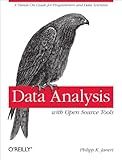
Data Analysis with Open Source Tools: A Hands-On Guide for Programmers and Data Scientists

XTOOL TP150 TPMS Programming Tool, 2025 TPMS Relearn Tool, Activate/Relearn All Known TPMS Sensors, Program XTOOL TS100 Sensors (315/ 433MHz), TPMS Reset/Diagnosis
- EASY PROGRAMMING WITH 4 MODES FOR EFFICIENT INSTALLATION!
- LIFETIME UPDATES: STAY COMPATIBLE WITH ALL MAJOR VEHICLES!
- QUICKLY DIAGNOSE & RESET TPMS FOR ENHANCED SAFETY!
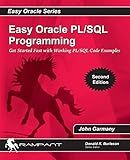
Easy Oracle PLSQL Programming: Get Started Fast with Working PL/SQL Code Examples (Easy Oracle Series)
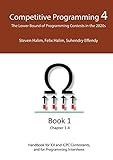
Competitive Programming 4 - Book 1: The Lower Bound of Programming Contests in the 2020s
To call a stored procedure of Oracle using C#, you can use the OracleCommand class from the Oracle Data Provider for .NET (ODP.NET) library.
First, create a connection to the Oracle database using the OracleConnection class and open the connection. Then, create an OracleCommand object and set the CommandType property to StoredProcedure.
Next, set the CommandText property to the name of the stored procedure you want to call. If the stored procedure takes any parameters, add them to the Parameters collection of the OracleCommand object.
Finally, execute the stored procedure using the ExecuteNonQuery() or ExecuteReader() method of the OracleCommand object, depending on whether the stored procedure returns any data. Close the connection after calling the stored procedure.
You can also handle any exceptions that may occur during the execution of the stored procedure to ensure your application behaves correctly.
How to handle null values when calling a stored procedure in Oracle using C#?
When calling a stored procedure in Oracle using C#, you can handle null values by checking for null values in the C# code before passing parameters to the stored procedure. Here is an example of how to handle null values when calling a stored procedure in Oracle using C#:
using Oracle.ManagedDataAccess.Client;
string connString = "your_connection_string_here"; using (OracleConnection conn = new OracleConnection(connString)) { conn.Open();
using (OracleCommand cmd = conn.CreateCommand())
{
    cmd.CommandType = System.Data.CommandType.StoredProcedure;
    cmd.CommandText = "your\_stored\_procedure\_name\_here";

    // Check for null values before passing parameters to the stored procedure
    cmd.Parameters.Add("param1", OracleDbType.Varchar2).Value = (object)param1 ?? DBNull.Value;
    cmd.Parameters.Add("param2", OracleDbType.Int32).Value = (object)param2 ?? DBNull.Value;

    cmd.ExecuteNonQuery();
}
}
In this code snippet, we are checking for null values in the param1 and param2 variables before passing them as parameters to the stored procedure. If the value is null, we are passing DBNull.Value instead of the actual value. This way, the stored procedure will receive a NULL value for the parameter, which is equivalent to a null value in Oracle.
How to debug issues when calling a stored procedure in Oracle using C#?
To debug issues when calling a stored procedure in Oracle using C#, you can follow these steps:
- Check the connection: Ensure that your Oracle connection is established properly in your C# code. Make sure that you are using the correct connection string, username, and password.
- Verify the stored procedure: Double-check the name of the stored procedure you are trying to call, along with its parameters. Make sure that the parameters are correctly defined in your C# code and match the ones in the stored procedure.
- Use logging: Insert debug statements or logging in your code to track the flow of execution and see if there are any errors being thrown.
- Check for exceptions: Wrap your stored procedure call in a try-catch block and log any exceptions that occur. This can help pinpoint the source of the issue.
- Use SQL tracing: Enable SQL tracing in Oracle to capture detailed information about the SQL statements being executed. This can help you identify any issues with the stored procedure call.
- Test the stored procedure separately: Try running the stored procedure directly in Oracle SQL Developer or another SQL client to see if it is functioning correctly. This can help isolate the issue to either the stored procedure or the C# code.
- Consult Oracle documentation: Check the Oracle documentation for the stored procedure you are calling to ensure that you are using the correct syntax and parameters.
By following these steps, you should be able to effectively debug any issues when calling a stored procedure in Oracle using C#.
How to pass output parameters to a stored procedure in Oracle using C#?
To pass output parameters to a stored procedure in Oracle using C#, you can use the OracleParameter class in the Oracle.ManagedDataAccess.Client namespace. Here is an example code snippet that demonstrates how to pass output parameters to a stored procedure in Oracle using C#:
using System; using Oracle.ManagedDataAccess.Client;
class Program { static void Main() { string connectionString = "your_connection_string_here";
    using (OracleConnection connection = new OracleConnection(connectionString))
    {
        connection.Open();

        using (OracleCommand command = connection.CreateCommand())
        {
            command.CommandType = System.Data.CommandType.StoredProcedure;
            command.CommandText = "your\_stored\_procedure\_name\_here";

            // Define output parameter
            OracleParameter outputParam = new OracleParameter();
            outputParam.ParameterName = "output\_param";
            outputParam.OracleDbType = OracleDbType.Int32;
            outputParam.Direction = System.Data.ParameterDirection.Output;
            command.Parameters.Add(outputParam);

            // Execute the stored procedure
            command.ExecuteNonQuery();

            // Get the value of the output parameter
            int outputValue = Convert.ToInt32(outputParam.Value);
            Console.WriteLine("Output parameter value: " + outputValue);
        }
    }
}
}
Make sure to replace your_connection_string_here with your Oracle database connection string and your_stored_procedure_name_here with the name of the stored procedure you want to call. You can also customize the data type and name of the output parameter as needed.
What is the role of the OracleCommand class when calling a stored procedure using C#?
The OracleCommand class in C# is used to execute SQL commands against an Oracle database. When calling a stored procedure using C#, the OracleCommand class is used to create and execute the command to call the stored procedure.
The OracleCommand class provides methods and properties to set the command type to stored procedure, specify the stored procedure name, and add parameters to pass values to the stored procedure. It also provides methods to execute the command and retrieve the results returned by the stored procedure.
Overall, the OracleCommand class plays a crucial role in calling a stored procedure using C# by facilitating the creation and execution of the command to interact with the Oracle database.