
Best Python Data Analysis Books to Buy in October 2026

Python Crash Course, 3rd Edition: A Hands-On, Project-Based Introduction to Programming



Automate the Boring Stuff with Python, 3rd Edition

Python Programming Language: a QuickStudy Laminated Reference Guide

Python Programming for Beginners: The Complete Python Coding Crash Course - Boost Your Growth with an Innovative Ultra-Fast Learning Framework and Exclusive Hands-On Interactive Exercises & Projects

Learning Python: Powerful Object-Oriented Programming

Python All-in-One For Dummies (For Dummies: Learning Made Easy)
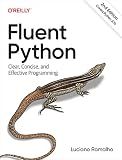
Fluent Python: Clear, Concise, and Effective Programming

Python Programming for Beginners: The Complete Guide to Mastering Python in 7 Days with Hands-On Exercises – Top Secret Coding Tips to Get an Unfair Advantage and Land Your Dream Job!
To get the last record in a groupby() in pandas, you can first group your dataframe using the groupby() method and then apply the last() method to retrieve the last record in each group. This will return the last row for each group based on the group keys. You can also use the tail(1) method to achieve the same result.
How to get the last row of a group in a pandas groupby() query?
You can use the tail() method in combination with groupby() to get the last row of each group in a pandas DataFrame.
Here is an example:
import pandas as pd
Create a sample DataFrame
data = {'Group': ['A', 'A', 'A', 'B', 'B', 'B'], 'Value': [1, 2, 3, 4, 5, 6]} df = pd.DataFrame(data)
Group by 'Group' column and get the last row of each group
last_rows = df.groupby('Group').tail(1)
print(last_rows)
This will output:
Group Value 2 A 3 5 B 6
In this example, the tail(1) method is used to get the last row of each group after grouping by the 'Group' column.
How do I get the last row of each group in a pandas groupby() result?
You can get the last row of each group in a pandas groupby() result by using the tail() method and passing 1 as an argument. This will return the last row of each group.
Here's an example:
import pandas as pd
Create a sample dataframe
data = {'group': ['A', 'A', 'B', 'B', 'B', 'C', 'C'], 'value': [1, 2, 3, 4, 5, 6, 7]} df = pd.DataFrame(data)
Group by 'group' column
grouped = df.groupby('group')
Get the last row of each group
last_rows = grouped.tail(1)
print(last_rows)
This will output:
group value 1 A 2 4 B 5 6 C 7
How to access the final entry of a pandas groupby() outcome?
You can access the final entry of a pandas groupby() outcome by using the tail() method after applying the groupby() function. Here's an example code snippet to demonstrate how to do it:
import pandas as pd
Create a sample DataFrame
data = { 'Category': ['A', 'A', 'A', 'B', 'B', 'B'], 'Value': [10, 20, 30, 40, 50, 60] } df = pd.DataFrame(data)
Group by 'Category' and access the final entry of each group
final_entries = df.groupby('Category').tail(1) print(final_entries)
In this example, we first create a sample DataFrame with two columns 'Category' and 'Value'. We then group the DataFrame by the 'Category' column and use the tail(1) method to access the final entry of each group. The final_entries DataFrame will contain the final entry of each group.
What is the technique for getting the last record in a groupby() result set in pandas?
To get the last record in a groupby() result set in pandas, you can use the last() function.
For example, if you have a DataFrame df and you want to group it by a column called 'group' and then get the last record of each group, you can do the following:
import pandas as pd
Sample DataFrame
data = {'group': ['A', 'A', 'B', 'B', 'B'], 'value': [1, 2, 3, 4, 5]} df = pd.DataFrame(data)
Group by 'group' column and get the last record of each group
last_record_per_group = df.groupby('group').last()
print(last_record_per_group)
This will output:
value
group
A 2
B 5