Best Raspberry Pi to Buy in October 2026
The Raspberry Pi is a versatile, credit-card-sized computer that has sparked innovation across the globe. Central to its functionality is the GPIO (General Purpose Input Output), a crucial feature that allows users to interact with and control a wide range of electronic components. In 2025, advancements in Raspberry Pi GPIO programming have further enhanced its capabilities, making it a staple for both hobbyists and professionals alike. This article delves into the intricacies of Raspberry Pi GPIO programming, guiding you through choosing the right Raspberry Pi model for your projects.
Understanding Raspberry Pi GPIO
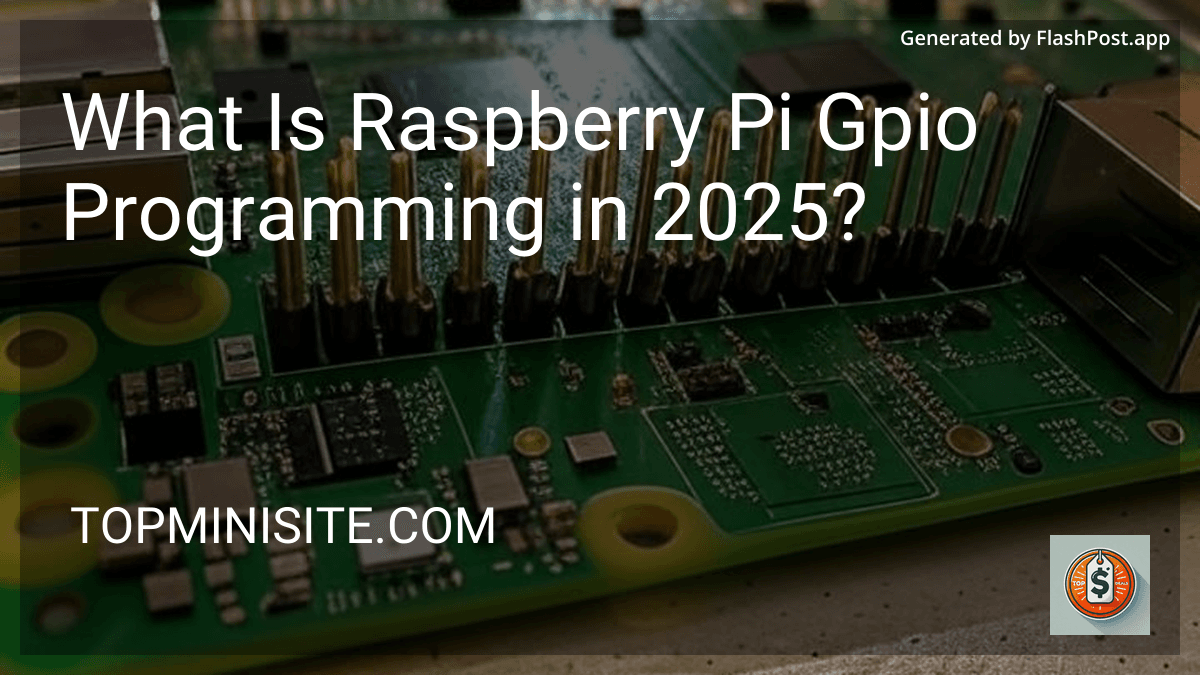
GPIO pins on the Raspberry Pi facilitate the interface between the physical and digital worlds. These pins enable you to connect and control devices, such as LEDs, sensors, and motors. By programming these pins, you can create a myriad of projects, from basic circuits to complex home automation systems. Each GPIO pin can act as either an input or an output, making Raspberry Pi incredibly versatile.
What’s New in Raspberry Pi GPIO Programming in 2026?
In 2025, Raspberry Pi GPIO programming has seen numerous advancements. Recent updates in software and libraries have made programming more accessible and efficient than ever before. New tools have emerged, streamlining the integration of new components and encouraging innovative uses.
The Evolving Software Libraries
Python remains the most popular language for GPIO programming due to its simplicity and ease of use. However, improvements in the GPIO libraries, such as RPi.GPIO and the newer gpiozero, have added functionalities that reduce code complexity and improve performance. These libraries have been updated to support the latest Raspberry Pi models, ensuring compatibility and extending their functionality.
How to Choose the Right Raspberry Pi for Your Project
Selecting the right Raspberry Pi depends on your project’s requirements. Here are a few considerations:
Power and Performance Needs
If your project demands high processing power, such as running AI applications or multiple peripherals, the Raspberry Pi 4 with its quad-core processor and up to 8GB RAM might be your best choice. For simpler projects, earlier models like the Raspberry Pi Zero W, known for its low power consumption and compact design, could suffice.
Connectivity Requirements
Consider the connectivity options you need. If you require Wi-Fi and Bluetooth connectivity, make sure to choose a model that supports this, such as the Raspberry Pi 3 Model B+ or later.
Physical Space Constraints
The physical size can be a constraint, especially in projects with limited space. Raspberry Pi Zero’s small form factor is ideal for such situations without sacrificing too much functionality.
Raspberry Pi GPIO Programming: A Path to Innovation
Programming GPIO on a Raspberry Pi opens a wide array of possibilities in both learning and inventing. By understanding the fundamentals and selecting the appropriate Raspberry Pi model, creators can bring their projects to life. However, successful programming also involves overcoming coding challenges. Learn more about common interview pitfalls in coding to better equip yourself.
For more advanced programming, especially dealing with asynchronous operations, you might consider understanding how to use async and await in Koa. These skills can further simplify the complex coding processes, akin to how Groovy builders simplify coding tasks in their domain.
In conclusion, Raspberry Pi GPIO programming continues to evolve, offering new opportunities and challenges. As you embrace this technology, remember to stay updated with the latest developments and leverage resources that will guide you through common coding challenges.