
Best Tools to Test Windows Remotely with PowerShell to Buy in October 2026
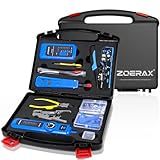
Professional Network Tool Kit, ZOERAX 14 in 1 - RJ45 Crimp Tool, Cat6 Pass Through Connectors and Boots, Cable Tester, Wire Stripper, Ethernet Punch Down Tool
- ALL-IN-ONE KIT: TOOLS ORGANIZED IN A DURABLE, PORTABLE CASE.
- COMPLETE SET FOR PROS: CRIMPER, STRIPPER, TRACKER, AND CONNECTORS INCLUDED.
- VERSATILE CRIMPER: EASY ADJUSTMENTS, WORKS WITH MULTIPLE CONNECTOR TYPES.


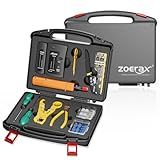
Network Tool Kit, ZOERAX 11 in 1 Professional RJ45 Crimp Tool Kit - Pass Through Crimper, RJ45 Tester, 110/88 Punch Down Tool, Stripper, Cutter, Cat6 Pass Through Connectors and Boots
- LIGHTWEIGHT, DURABLE CASE FOR VERSATILE USE IN ANY ENVIRONMENT.
- CRIMP, STRIP, AND CUT CABLES EFFICIENTLY WITH ALL-IN-ONE TOOL.
- QUICKLY TEST CONNECTIONS WITH USER-FRIENDLY MULTI-FUNCTION CABLE TESTER.
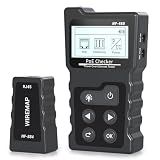
KOLSOL Network Cable Tester RJ45, NF-488 Multifunction Poe Ethernet Cable Tester Kit for CAT5e/CAT6/CAT6a, Network Cable Continuity Tester DC Power & Switch Loop-Back Test Poe Checker
- COMPREHENSIVE TESTING: POE, CONTINUITY, AND POWER MEASUREMENTS IN ONE TOOL.
- REAL-TIME MONITORING: CLEAR LCD DISPLAYS VOLTAGE AND POWER CONSUMPTION DATA.
- ENHANCED USABILITY: LED LIGHT, BACKLIGHT, AND ERGONOMIC DESIGN FOR CONVENIENCE.
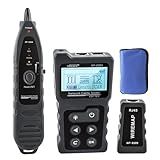
NOYAFA NF-8209 Network Cable Tester, Ethernet Cable Wire Tester with POE & NCV for CAT5/CAT6 Wire Tracer, Length Test, RJ45 Network Tester Kit for Cable Tracer Telephone Line Finder Home Repair
-
VERSATILE TESTING: TESTS MULTIPLE CABLE TYPES AND POE MODES EFFICIENTLY.
-
PRECISION LENGTH MEASUREMENT: ACCURATE RESULTS FOR QUICK FAULT LOCATION.
-
USER-FRIENDLY FEATURES: LED LIGHT AND FAST CUSTOMER SUPPORT ENHANCE USABILITY.
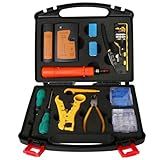
trophable Network Tool Kit 12 in 1 Professional RJ45 Crimp Tool Kit
- COMPLETE TOOL KIT: ALL ESSENTIALS IN ONE PORTABLE CASE FOR CONVENIENCE.
- VERSATILE CRIMPER: CRIMPS, STRIPS, AND CUTS RJ45, RJ11, AND MORE!
- RELIABLE CABLE TESTER: ENSURES LAN CONNECTIVITY FOR EFFICIENT INSTALLATIONS.
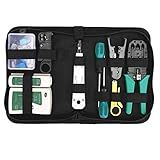
Gaobige Network Tool Kit for Cat5 Cat5e Cat6, 11 in 1 Ethernet Crimper Kit
-
ALL-IN-ONE TOOL KIT: 11 ESSENTIAL TOOLS FOR EFFICIENT NETWORKING TASKS.
-
TIME-SAVING CRIMPER: 3-IN-1 TOOL BOOSTS EFFICIENCY FOR ALL CABLE TYPES.
-
VERSATILE CABLE TESTER: QUICKLY TESTS RJ11, RJ12, RJ45, AND NETWORK CABLES.
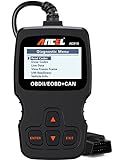
ANCEL AD310 Classic Enhanced Universal OBD II Scanner Car Engine Fault Code Reader CAN Diagnostic Scan Tool, Read and Clear Error Codes for 1996 or Newer OBD2 Protocol Vehicle (Black)
- QUICK & ACCURATE CODE READINGS FOR HASSLE-FREE VEHICLE DIAGNOSIS.
- COMPACT, STURDY DESIGN FOR EASY TRANSPORT AND EVERYDAY USE.
- SUPPORTED BY SCOTTY KILMER-TRUSTWORTHY RECOMMENDATION FOR BUYERS.
To test if a window is open remotely in PowerShell, you can use the Test-NetConnection cmdlet along with the -Port parameter to check if a specific port is open on the remote machine. For example, if you want to test if a window is open on a remote machine with IP address 192.168.1.100 on port 3389 (which is commonly used for Remote Desktop Protocol), you can run the following command:
Test-NetConnection -ComputerName 192.168.1.100 -Port 3389
If the output shows that the port is open, then a window is most likely open on the remote machine. Additionally, you can enable PSRemoting on the remote machine and use Invoke-Command to run PowerShell commands on the remote machine to check for open windows.
How to remotely verify if a specific window is open using PowerShell?
You can remotely verify if a specific window is open using PowerShell by using the Get-Process cmdlet along with the Where-Object cmdlet to filter for the specific process name of the window you want to check. Here's a step-by-step guide:
- Open PowerShell on your local machine.
- Use the Enter-PSSession cmdlet to establish a remote PowerShell session on the target machine. Replace "RemoteComputerName" with the actual name or IP address of the remote machine.
Enter-PSSession -ComputerName RemoteComputerName
- Use the Get-Process cmdlet to list all the processes currently running on the remote machine.
Get-Process
- Use the Where-Object cmdlet to filter for the specific process name of the window you want to check. Replace "notepad" with the actual process name of the window you want to check.
Get-Process | Where-Object {$_.ProcessName -eq "notepad"}
- If the specific window is open, you will see information about the process in the output. If the specific window is not open, there will be no output.
- Once you have verified if the specific window is open, you can exit the remote PowerShell session using the Exit-PSSession cmdlet.
Exit-PSSession
By following these steps, you can remotely verify if a specific window is open using PowerShell.
What commands can I use in PowerShell to check if a window is open remotely?
To check if a window is open remotely in PowerShell, you can use the following commands:
- Use the Get-Process cmdlet to list all processes running on the remote computer. You can specify the computer name as a parameter to retrieve processes from a remote machine. Here is an example command:
Get-Process -ComputerName RemoteComputerName
- If you know the name of the process or window you are looking for, you can filter the results using the Where-Object cmdlet. Here is an example command:
Get-Process -ComputerName RemoteComputerName | Where-Object {$_.MainWindowTitle -eq "WindowTitle"}
Replace "RemoteComputerName" with the name of the remote computer you want to check and "WindowTitle" with the title of the window you are looking for.
- You can also use the Test-Connection cmdlet to check if the remote computer is accessible before running the Get-Process cmdlet. Here is an example command:
Test-Connection -ComputerName RemoteComputerName -Count 1
if ($?) { Get-Process -ComputerName RemoteComputerName | Where-Object {$_.MainWindowTitle -eq "WindowTitle"} } else { Write-Host "Remote computer is not reachable." }
Replace "RemoteComputerName" with the name of the remote computer you want to check and "WindowTitle" with the title of the window you are looking for.
These commands will help you check if a window is open remotely using PowerShell.
What is the PowerShell function to determine if a window is open on a remote system?
To determine if a window is open on a remote system using PowerShell, you can use the following function:
function CheckRemoteWindowOpen { param ( [string]$ComputerName, [string]$WindowTitle )
$processes = Get-WmiObject -Class Win32\_Process -ComputerName $ComputerName
foreach ($process in $processes) {
    $windowTitle = (New-Object -ComObject wscript.shell).AppActivate($process.ProcessId)
    if ($windowTitle -eq $WindowTitle) {
        return $true
    }
}
return $false
}
Example usage
$computerName = "REMOTE_COMPUTER_NAME" $windowTitle = "WINDOW_TITLE" $isWindowOpen = CheckRemoteWindowOpen -ComputerName $computerName -WindowTitle $windowTitle
if ($isWindowOpen) { Write-Host "$windowTitle is open on $computerName." } else { Write-Host "$windowTitle is not open on $computerName." }
This function uses Get-WmiObject cmdlet to retrieve information about the processes running on a remote system. It then iterates through each process and attempts to activate the window using AppActivate method of wscript.shell COM object. If the window title matches the specified $WindowTitle, the function returns $true, indicating that the window is open on the remote system. Otherwise, it returns $false.
How to use PowerShell to verify if a window is open on a remote workstation?
To verify if a window is open on a remote workstation using PowerShell, you can use the following steps:
- Establish a remote PowerShell session with the target workstation by using the Enter-PSSession cmdlet. For example:
Enter-PSSession -ComputerName remotecomputername
- Use the Get-Process cmdlet to retrieve a list of processes running on the remote workstation. You can filter the results based on the process name or window title. For example, to check if a specific window title is open:
Get-Process | Where-Object {$_.MainWindowTitle -eq "Window Title"}
- If the window is open, the above command will return the process information. You can then perform further actions based on the result.
- After you have finished verifying if the window is open, exit the remote PowerShell session by using the Exit-PSSession cmdlet:
Exit-PSSession
By following these steps, you can use PowerShell to verify if a window is open on a remote workstation.